Services & Rates
- » Massage Therapy for Relaxation
- » Neuromuscular Massage Therapy
- » Focal Vibration Therapy
- » Stretch Therapy
- » SF Bay Travel Fees
Massage Therapy for Relaxation
-
East-Meets-West Massage
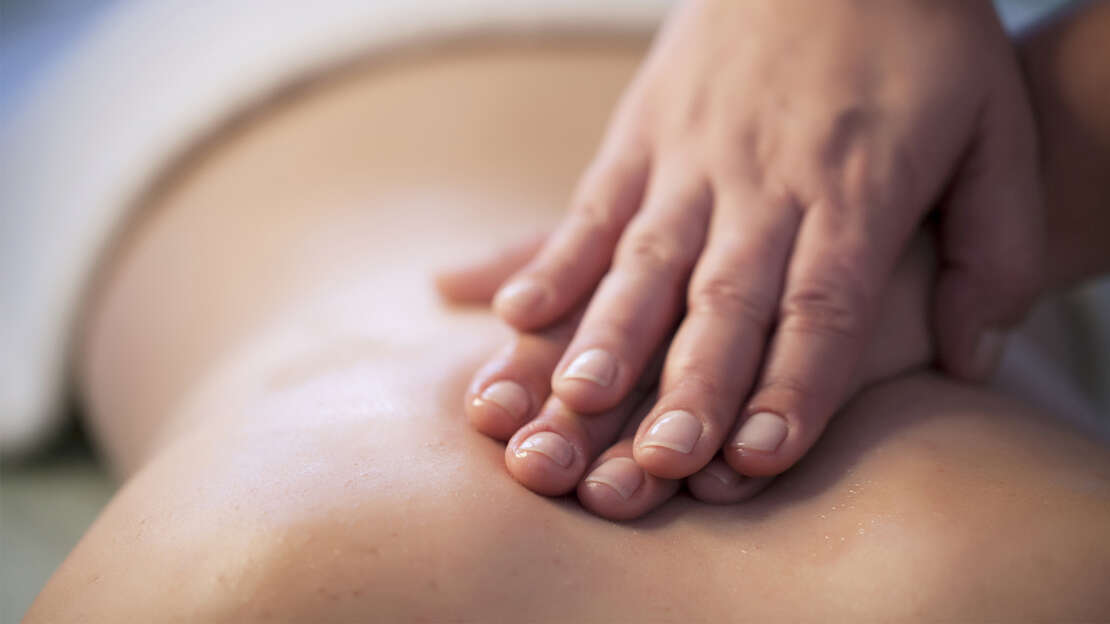
Experience the best of both worlds with this harmonious blend of Eastern and Western bodywork. This deeply therapeutic session combines the flowing, muscle-specific techniques of Western modalities (like Swedish and Deep Tissue) to release chronic tension and improve circulation, with the ancient balancing wisdom of Eastern practices (such as Shiatsu, Thai, or Acupressure) to restore your energy flow and promote deep relaxation. Walk away feeling profoundly centered, balanced, and rejuvenated.
Each massage can be tailored to meet specific needs, whether you’re seeking relaxation, pain relief, or improved athletic performance. I often combine these modalities to create a customized treatment plan.
Neuromuscular Massage Therapy
Advanced Neuromuscular Massage Therapy (ANMT) is a specialized form of manual therapy that addresses the root causes of chronic pain and musculoskeletal dysfunction. Building on the principles of basic neuromuscular therapy, ANMT goes deeper into the clinical assessment and treatment of soft-tissue pain patterns throughout the body.
Core principles: Advanced Neuromuscular Therapy works by applying targeted, sustained pressure to specific areas of muscle and connective tissue. The therapy is designed to address five key factors that cause pain:
- Trigger points: Microscopic knots in muscles that cause pain in other, seemingly unrelated parts of the body.
- Ischemia: Areas of muscle tissue with inadequate blood flow, leading to tension and pain.
- Nerve compression: Pressure on nerves caused by soft tissue, which can result in tingling, pain, or numbness.
- Postural distortion: Imbalances in the musculoskeletal system that develop from poor posture, placing stress on muscles and joints.
- Biomechanical dysfunction: Improper movement patterns that place abnormal stress on tissues.
Advanced techniques: Unlike a general relaxation massage, ANMT requires extensive training and uses specific techniques to achieve therapeutic goals. These may include:
- Myofascial release: Gentle, sustained pressure and stretching that release restrictions in the fascia, the connective tissue surrounding muscles.
- Trigger point therapy: The application of static pressure (often held for 10–30 seconds) directly to trigger points to release muscle tension.
- Proprioceptive Neuromuscular Facilitation (PNF) stretching: Techniques that combine stretching and strategic muscle contractions to increase flexibility and range of motion.
- Positional release: Gently moving the body into specific positions that naturally reduce muscle tension before deeper work is performed.
- Deep transverse friction: Applied across muscle fibers to break up scar tissue during the healing process.
- Medical massage: A structured, medically oriented approach that includes a detailed assessment (History, Observation, Palpation, Special tests) to collaborate with other healthcare professionals.
Who can benefit from ANMT?
ANMT is a clinically focused approach often recommended for chronic conditions that have not responded to other treatments. Common conditions treated with ANMT include:
- Chronic lower back, neck, and shoulder pain
- Headaches and migraines
- Temporomandibular joint (TMJ) pain
- Carpal Tunnel Syndrome
- Sciatica
- Plantar Fasciitis
- Fibromyalgia
- Rehabilitation after injury or surgery
Advanced training for practitioners: The "advanced" component refers to the specialized, higher-level training massage therapists receive to assess and treat complex conditions.
- Functional anatomy: In-depth study of how the body's structure relates to its movement and function.
- Orthopedic assessment: Techniques to evaluate posture, range of motion, and injury to create targeted treatment plans.
- Clinical reasoning: The critical thinking skills to analyze complex pain patterns and determine the best course of action.
- Biopsychosocial pain management: A holistic approach that acknowledges how biological, psychological, and social factors influence a person's pain and recovery.
Focal Vibration Therapy
What is Focal Vibration Therapy?
Focal Vibration Therapy (FVT) is a treatment that uses high-frequency vibrations to relieve muscle and joint pain, stiffness, and other musculoskeletal conditions. This therapy is typically performed using a device that generates vibrations, which are then applied directly to the affected area of the body.
The theory behind FVT is that vibrations stimulate sensory receptors in muscles, tendons, and joints, helping reduce pain and improve flexibility and range of motion. The vibrations also increase blood flow to the affected area, which can promote healing and reduce inflammation.
FVT can be used to treat a wide range of musculoskeletal conditions, including:
- Osteoarthritis
- Plantar fasciitis
- Back pain
- Tennis elbow
- Carpal tunnel syndrome
- Shoulder pain
- Knee pain
What evidence is there that Focal Vibration Therapy is Effective?
There is some evidence that direct vibration therapy may be effective for specific conditions. For example, massage therapy, which involves manual vibration and pressure, is effective in reducing muscle pain and improving muscle function in people with conditions such as fibromyalgia, lower back pain, and knee osteoarthritis. Trigger point therapy, which involves applying localized pressure and vibration to specific points in the muscles, has also been found to be effective in reducing pain and improving mobility in people with chronic myofascial pain.
What Research Is There to Prove Focal Vibration Therapy Is Effective?
Rhea MR, Bunker D, Marin PJ, Lunt K. Effect of iTonic whole-body vibration on delayed-onset muscle soreness among untrained individuals. Journal of Strength and Conditioning Research. 2009;23(6):1677–1682. doi: 10.1519/JSC.0b013e3181b3df43
https://doi.org/10.1519/JSC.0b013e3181b3df43
Veqar Z, Imtiyaz S. Vibration therapy in the management of delayed onset muscle soreness (DOMS). Journal of Clinical and Diagnostic Research. 2014;8(6):LE01–LE04. doi: 10.7860/JCDR/2014/7323.4434
https://www.ncbi.nlm.nih.gov/pmc/articles/PMC4129965/
Maloney-Hinds C, Petrofsky JS, Zimmerman G. The effect of 15 minutes of vibration therapy on the gluteus maximus on the skin temperature and blood flow. Medical Science Monitor. 2008;14(3):CR112–CR116.
https://pubmed.ncbi.nlm.nih.gov/18301434/
Luo J, McNamara B, Moran K. The use of vibration training to enhance muscle strength and power. Sports Medicine. 2005;35(1):23–41. doi: 10.2165/00007256-200535010-00003
https://pubmed.ncbi.nlm.nih.gov/15651914/
Schuhfried O, Mittermaier C, Jovanovic T, Pieber K, Paternostro-Sluga T. Effects of whole-body vibration in patients with multiple sclerosis: a pilot study. Clinical Rehabilitation. 2005;19(8):834–842. doi: 10.1191/0269215505cr905oa
https://pubmed.ncbi.nlm.nih.gov/16250108/
Pujari AN, Nadimpalli Y, Barret JP, et al. Wearable focal vibration therapy to improve gait in people with diabetic peripheral neuropathy. Journal of Clinical Medicine. 2020;9(11):3767. doi: 10.3390/jcm9113767
https://www.mdpi.com/2077-0383/9/11/3767
Wilkenfeld AJ, Gustafson JA, Lemaire ED, Buis AW. Focal vibration as a therapy for neurological disorders: a review. Disability and Rehabilitation: Assistive Technology. 2019;14(1):2–10. doi: 10.1080/17483107.2017.1392620
https://doi.org/10.1080/17483107.2017.1392620
Giggins OM, Persson UM, Caulfield B. Biofeedback in rehabilitation. Journal of NeuroEngineering and Rehabilitation. 2013;10:60. doi: 10.1186/1743-0003-10-60
https://jneuroengrehab.biomedcentral.com/articles/10.1186/1743-0003-10-60
Imtiyaz S, Veqar Z, Shareef MY. To compare the effects of vibration therapy and massage in the prevention of delayed onset muscle soreness (DOMS). Journal of Clinical and Diagnostic Research. 2014;8(1):133–136. doi: 10.7860/JCDR/2014/7294.3971
https://www.ncbi.nlm.nih.gov/pmc/articles/PMC3919366/
Chung LH, Ng GY, Chow DH. Effect of vibration therapy on muscle flexibility and performance: a preliminary study. Clinical Biomechanics. 2012;27(2):218–222. doi: 10.1016/j.clinbiomech.2011.09.009
https://doi.org/10.1016/j.clinbiomech.2011.09.009
What is the benefit of using a pinpoint tip?
Pinpoint tip accuracy can be beneficial in treating tendon, joint, and ligament pain, as it allows for more precise targeting of the affected area. Tendons, joints, and ligaments are often small and located in hard-to-reach places. Accurate targeting can help ensure the treatment is focused on the specific area where the pain originates.
Overall, pinpoint accuracy can be an essential tool for treating tendon, joint, and ligament pain, allowing more targeted and effective treatment while minimizing potential side effects or complications.
What is the benefit of using different vibration patterns?
One way vibration patterns can impact the body is by affecting different aspects of physical function. For example, studies have shown that intermittent vibration can improve bone density, while continuous vibration can improve muscle strength. This means that healthcare providers can use different vibration patterns to target specific areas of physical function that may be deficient in a given patient.
Intermittent vibration, characterized by short bursts separated by rest periods, is particularly effective at improving bone density. This is thought to be because the vibration causes small changes in the body's gravitational forces, which can stimulate bone remodelling and the deposition of new bone tissue. Intermittent vibration is efficacious in improving bone density in postmenopausal women and older adults, who are at increased risk for osteoporosis and bone fractures.
Continuous vibration, on the other hand, has been shown to improve muscle strength. This is thought to be because the vibration causes muscle contractions, which can lead to increased muscle activation and growth. Continuous vibration has been shown to improve muscle strength across a variety of populations, including athletes and older adults.
In addition to targeting specific aspects of physical function, different vibration patterns can also be used to tailor WBV treatment to the individual needs of patients. For example, patients recovering from an injury or surgery may benefit from a gentler vibration pattern, while athletes or individuals looking to improve their fitness may benefit from a more intense one.
Conclusion
In conclusion, Focal Vibration Therapy can relieve muscle tension, reduce pain, and improve circulation. Its unique frequency and vibration patterns provide optimum results. Using a pinpoint tip allows for hard-to-reach areas to be accessed. There is evidence to suggest that Direct Vibration Therapy can be effective for certain conditions, including muscle pain and osteoarthritis. Studies have also identified that specific frequencies, such as 35 Hz and 50 Hz, may be effective in improving muscle strength, power, and balance. Overall, Tend is a promising and innovative approach to Direct Vibration Therapy, with the potential to help people manage their physical conditions effectively.
Stretch Therapy
Neuromuscular Connection
The primary purpose of stretching is to improve communication between the muscle and the brain. It is said that tight muscles lack clear communication from the brain. Consider the muscle and the brain as two different parts of the body trying to communicate through a two-way channel. The brain tells the muscles when to release and when to tighten. Stretching increases the muscle's ability to hear the brain's command. The brain's job is to protect the muscle under all circumstances. Muscle tightening is simply a message from the brain indicating that it is unsafe. Utilizing traction, breathing, and lengthening facilitates communicating to the muscle that it is safe. Lengthening is how we encourage communication to the muscle. Utilizing traction, breathing, and lengthening facilitates communication with the muscle.
Muscle and Emotional Memory
The body can remember everything. The body is constantly keeping score on its physical abilities and limitations, as well as its trauma. This is called muscle memory. When a person experiences an emotional expression, whether good or bad, the body will also remember the state it was in at that time and hold that as a memory, which can recur in the presence of that expression. This is called emotional memory.
Symmetry
Due to postural deviations, trauma/injury, and repetitive activity, the body can become off-center and imbalanced. Stretching the body realigns it and its center of gravity, restoring symmetry. An asymmetrical or imbalanced body blocks the body's natural flow. Furthermore, an asymmetrical body will cause deviations and posture as well as increase joint degeneration and overall tension throughout the body.
SF Bay Travel Fees
Travel fees are based on time spent traveling to and from locations.
Covers gas mileage,
wear and tear on the vehicle,
parking fees,
bridge toll fees,
equipment carry and setup.
Prices vary.